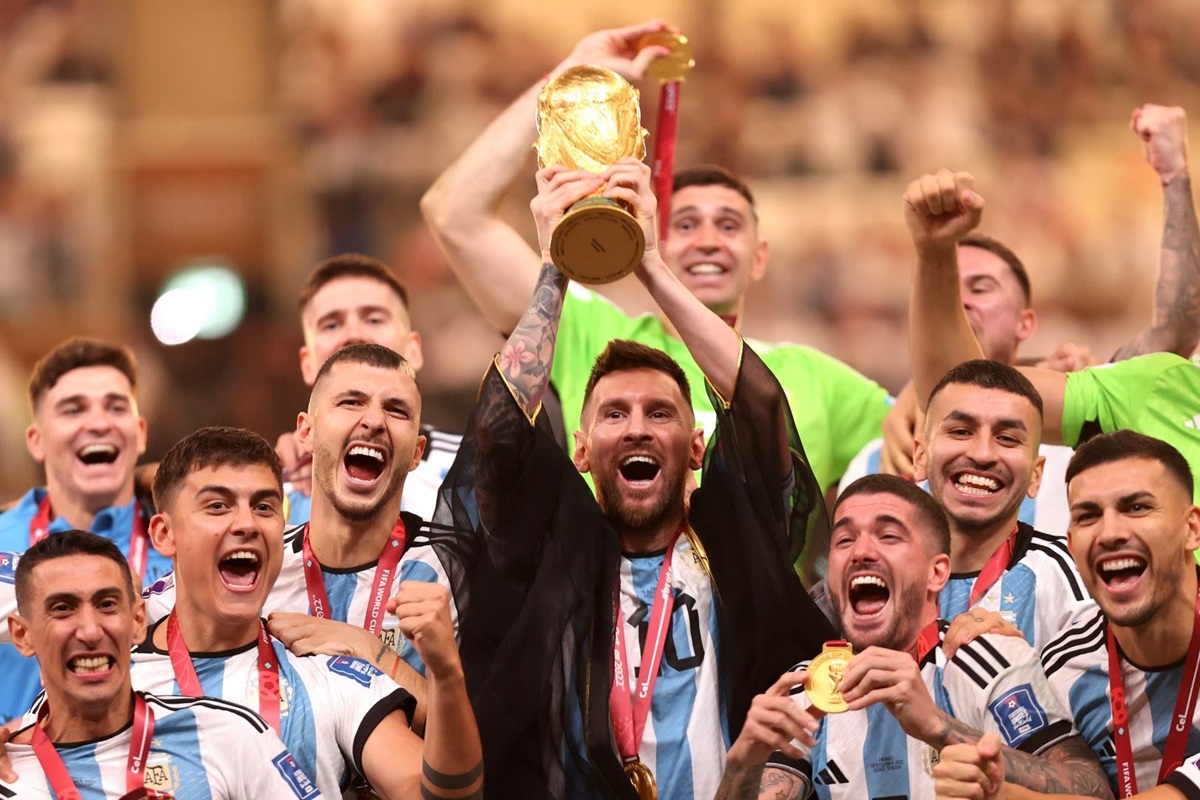
The 2026 FIFA World Cup will mark a turning point not only because of its expanded format, its three host countries, and its 48 participating teams. It will also be remembered for a figure that captures, better than almost any other, the economic scale of modern football. The champion of the 2026 World Cup will take home 50 million dollars, the highest prize ever awarded by FIFA to a national team for winning a World Cup.
This is not an isolated number. It is the most visible tip of a record-breaking distribution that confirms the World Cup is no longer just the most-watched sporting event on the planet, but also one of the largest financial engines in global sports.
A historic prize for an unprecedented World Cup
The increase is striking even by recent standards. At Qatar 2022, Argentina earned 42 million dollars for lifting the trophy. Four years later, the champion will receive eight million more. This jump is not simply a matter of inflation or a symbolic gesture by FIFA. It reflects a structural reality: the 2026 World Cup will be the biggest and most profitable in history.
The United States, Mexico, and Canada will host a tournament featuring 104 matches, an unprecedented potential audience, and commercial agreements that far exceed those of any previous edition. With more matches and more teams, revenues from television rights, sponsorships, and hospitality have surged. FIFA has decided that this expansion should also be reflected in sporting prizes.
A distribution that shatters all records
FIFA has approved a total prize fund of 727 million dollars for the teams participating in 2026. Of that amount, 655 million dollars will be distributed based on sporting performance, while the remainder will be allocated to preparation expenses and logistical support for national federations.
A simple comparison shows the magnitude of the leap. At Qatar 2022, the total prize pool stood at 440 million dollars. The increase is close to 50 percent. Never before has a World Cup distributed so much money among its participants.
This growth does not benefit only those who reach the final stages. The new model is designed so that every national team leaves with guaranteed income, even those eliminated in the group stage.
Just qualifying is already big business
At the 2026 World Cup, qualification itself comes with a reward. Each federation will receive 1.5 million dollars to cover preparation costs ahead of the tournament. That is in addition to the prize money earned for participating in the group stage.
Teams eliminated in the first round, finishing between 33rd and 48th place, will receive an additional 9 million dollars. In practical terms, no team will leave North America with less than 10.5 million dollars in its accounts.
For many mid-sized or smaller federations, this amount represents an injection of resources that would be extremely difficult to obtain under other circumstances. In some cases, it is equivalent to several years of a federation’s operating budget.
The money trail
The path to the 50 million dollars is clearly structured. Each round surpassed significantly increases the financial reward.
Advancing beyond the group stage raises total earnings to 11 million dollars. Reaching the round of 32 — a novelty of the expanded format — opens the door to higher figures. A place in the round of 16 guarantees 15 million dollars, while teams that reach the quarterfinals will receive 19 million dollars.
From there, the tournament enters its elite zone. Fourth place earns 27 million dollars, third place 29 million, and the runner-up 33 million dollars. The difference between winning and losing the final will be 17 million dollars, a gap that turns the last match into the most financially valuable game in the history of international football.
Fifty million beyond the trophy
The 50 million dollars awarded to the champion are more than a sporting prize. They are a tool of institutional power. For major federations, the money is often redistributed through bonuses for players and coaching staff, as well as long-term development programs. For others, it can mean infrastructure projects, youth academies, investment in women’s football, or long-overdue financial stabilization.
At a time when many national associations face structural challenges, the 2026 World Cup prize can reshape priorities and medium-term strategies. Winning the title does not only secure eternal prestige. It guarantees financial muscle.
A fairer World Cup, at least in distribution
One of FIFA’s core arguments is that the new system spreads financial benefits across more countries. With 48 teams and guaranteed payments, the impact of the World Cup reaches federations that historically took part only as sporting outsiders.
The organization led by Gianni Infantino has repeatedly emphasized that these funds should be reinvested in grassroots and youth football development. It is no coincidence that prize announcements have been accompanied by initiatives linked to training programs and support schemes for member associations.
Money as part of the spectacle
When the ball starts rolling in June 2026, 48 national teams will be chasing the same goal. Some will be chasing historic glory. Others, competitive survival. All of them, without exception, will know that every match is also played in dollars.
Because at the 2026 World Cup, winning does not just mean lifting the trophy. It means instantly entering the highest financial league international football has ever known.