
Few countries in South America can rival Colombia’s coastal diversity. With shores opening onto both the Caribbean Sea and the Pacific Ocean, the country offers beaches that feel less like variations of the same postcard and more like entirely different worlds. Here, sand color changes with geography, water tones shift by the hour, and culture is inseparable from landscape.
These five beaches capture that diversity at its most compelling—places where nature, history, and local life converge.
Playa Blanca
Just off the coast of Cartagena, Playa Blanca has long embodied the Caribbean fantasy visitors imagine when they think of Colombia. Its white sand and translucent turquoise waters remain the main attraction, but the real experience depends on timing and curiosity. Move away from the busiest stretches, and the beach regains its calm, revealing shallow waters ideal for snorkeling and long, unhurried swims.
As evening approaches, the mood shifts. The crowds thin, the light softens, and the sea reflects shades of gold and aquamarine. Simple eco-huts along the shore allow travelers to stay overnight, trading luxury for proximity to one of the Caribbean’s most striking sunsets.
Tayrona National Park Beaches
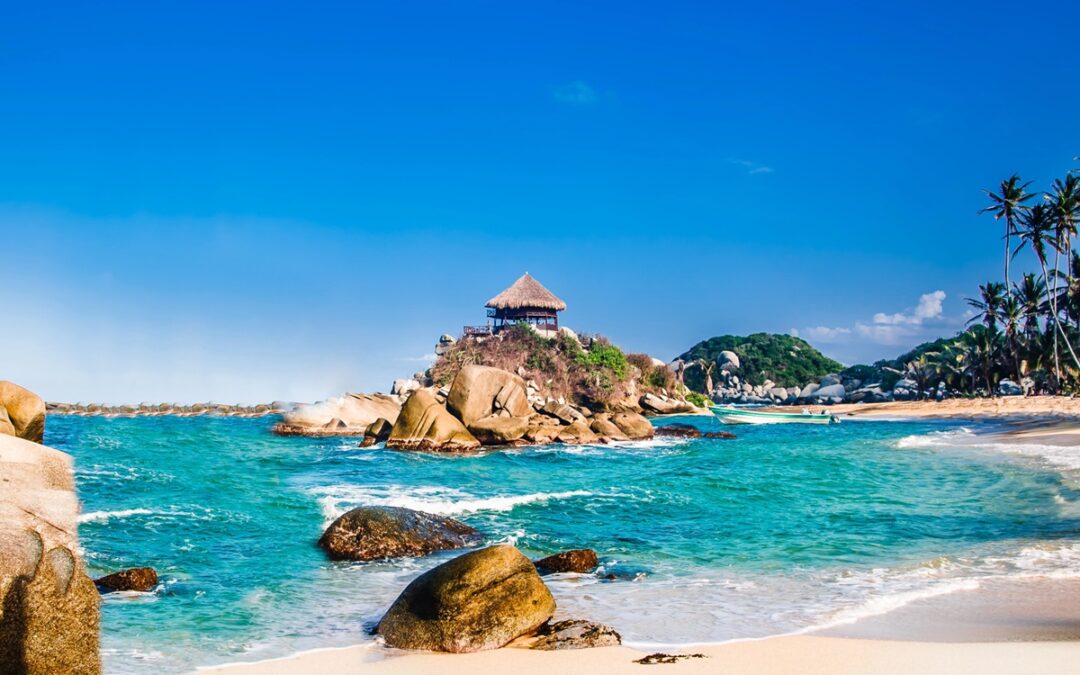
Tayrona is not a beach you simply arrive at—it’s one you earn. Reaching its coves requires hiking through dense tropical forest, where howler monkeys and iguanas are as common as the sound of the surf in the distance. That journey makes the arrival unforgettable.
Beaches like Cabo San Juan de Guía are framed by massive granite boulders and thick jungle, creating a landscape that feels almost prehistoric. Swimming is allowed in designated areas, though strong currents demand caution. Tayrona’s beaches are less about comfort and more about immersion—into nature, silence, and scale.
San Andrés Island’s Johnny Cay
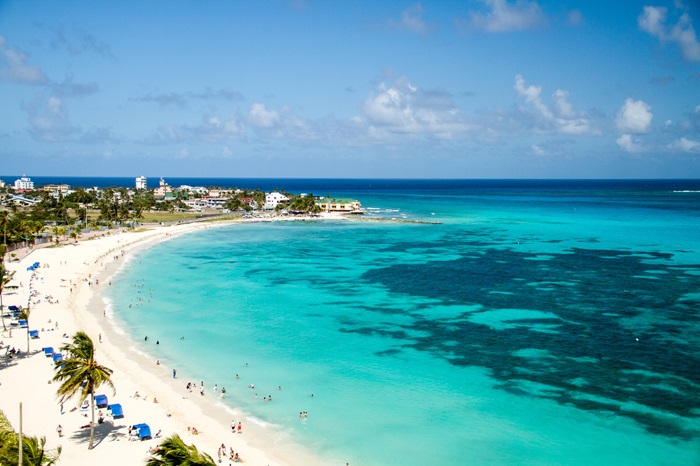
San Andres Island bay. Johnny Cay. Photo: Depositphotos
San Andrés is famous for its “Sea of Seven Colors,” and nowhere is that phenomenon more vivid than at Johnny Cay. This small coral islet, reachable by boat in minutes, offers a concentrated version of everything that defines the island: brilliant water, palm-lined shores, and a relaxed Afro-Caribbean rhythm.
Snorkeling reveals lively coral gardens populated by parrotfish and rays, while on land, the soundtrack shifts to reggae and the aroma of freshly grilled seafood. Johnny Cay may be small, but it distills San Andrés’ identity into a single, unforgettable setting.
Nuquí’s Guachalito Beach
On Colombia’s Pacific coast, Guachalito Beach feels like the edge of the world. Black volcanic sand meets dense rainforest, and waterfalls spill directly into the ocean. This is not a beach for crowds or cocktails—it’s a place for travelers seeking raw nature and isolation.
Between July and October, humpback whales arrive offshore to give birth, often visible from the beach itself. Eco-lodges built with sustainability in mind allow visitors to stay immersed in the environment, falling asleep to rain, waves, and the distant sound of the jungle.
Playa de Punta Gallinas, La Guajira
At the northernmost point of South America, Punta Gallinas offers one of Colombia’s most surreal coastal landscapes. Here, arid desert terrain gives way to intense blue Caribbean waters, and towering sand dunes slide directly into the sea at Playa Taroa.
The journey is long and demanding, but that remoteness preserves the area’s character. Visiting Punta Gallinas also means engaging with the Wayuu people, whose traditions, language, and craftsmanship are inseparable from the land. This is a beach experience defined as much by culture as by geography.
More Than Beaches, a Coastal Identity
Colombia’s beaches are not interchangeable escapes. Each reflects a distinct ecosystem, a unique rhythm of life, and a different cultural inheritance—from Afro-Caribbean traditions in the north to the rainforest communities of the Pacific and the ancestral Wayuu territory of La Guajira.
To travel Colombia’s coast is to understand the country itself: complex, diverse, and shaped as much by its people as by its geography. These beaches don’t just invite you to relax—they invite you to look closer.
And once you do, they stay with you long after the sand is gone from your shoes.
Photo of the portrait: Depositphotos


