Latina entrepreneurs are building companies in some of the areas defining the next stage of the technology industry, from artificial intelligence and digital health to recruitment platforms and climate technology. Their presence is growing at a moment when representation gaps remain substantial.
Women account for only 21% of tech talent working within the U.S. technology industry, according to CBRE’s 2026 analysis. Across the broader U.S. STEM workforce, Hispanic and Latina women also remain significantly underrepresented.
At the same time, networks supporting Latina professionals have expanded. Latinas in Tech, founded in 2014, now has more than 25 chapters and thousands of members, with programs focused on professional development, recruitment and mentorship. Its 2026 summit placed artificial intelligence, leadership and career growth at the center of the conversation.
The careers of Ariel Lopez, Marcela Torres, María Artunduaga, Laura I. Gómez and Graciela Chichilnisky illustrate different ways Latina entrepreneurs have entered — and changed — technology.
Ariel Lopez and the Push for a Fairer Hiring System

Ariel Lopez built her career in recruiting before becoming an entrepreneur and founding Knac, a technology company focused on improving the hiring process.
The problem Knac addresses remains familiar to anyone who has searched for a job online. Large companies receive enormous numbers of applications, many of which never receive meaningful human review. Knac uses data and automated screening tools to help companies evaluate applicants while trying to reduce bias and make the experience more transparent for candidates.
Lopez remains Knac’s founder and CEO. The company describes its mission as creating a more humane recruitment system in which qualified candidates are less likely to disappear inside overloaded hiring pipelines.
Her trajectory also shows how Latina founders are moving beyond simply increasing representation inside technology companies. Some are building products intended to change the systems through which workers enter those companies in the first place.
Marcela Torres and Technology as a Path for Migrants
Mexican entrepreneur Marcela Torres co-founded Hola Code to address a very different problem. The organization trained migrants, refugees, deportees and people returning to Mexico in software development, offering a possible route into higher-paying technology jobs.
Torres eventually stepped away from the company after roughly four years as CEO. Her experience became an unusual case study in another side of entrepreneurship — how founders separate themselves from organizations they created and allow those projects to continue without them.
María Artunduaga Takes Samay Into a New Stage

María Artunduaga has experienced one of the most significant evolutions.
The Colombian physician-scientist founded the company now known as Samay, inspired by the death of her grandmother Sylvia, who suffered from chronic obstructive pulmonary disease, or COPD.
Samay is developing Sylvee, an AI-powered acoustic wearable designed to help detect and monitor respiratory disease. The technology analyzes lung function using acoustic signals and is intended to make respiratory assessment more accessible outside specialized medical facilities.
Artunduaga’s work received new recognition in 2026. She was selected as one of 15 global winners of the Bayer Foundation Women Entrepreneurs Award from 1,172 applicants, receiving €25,000 in non-dilutive funding along with access to an accelerator and mentoring program.
Samay has also expanded its operations between Silicon Valley and Colombia. The company says it has secured 18 patents, while Artunduaga continues positioning Sylvee at the intersection of artificial intelligence, medtech and women’s health.
Laura I. Gómez Moves From Hiring Tech to Health AI

Laura I. Gómez is another founder whose career has changed significantly.
Born in Mexico and raised in Silicon Valley, Gómez previously worked at companies including YouTube and Twitter before founding Atipica, an AI-powered platform created to identify and reduce bias in recruiting.
That company made Gómez one of the more visible Latina entrepreneurs working on responsible uses of artificial intelligence long before the current generative AI boom.
Her focus has since shifted toward healthcare.
In 2023, Gómez founded Cepanoa Health, which is applying technology and AI to the health consequences associated with adverse childhood experiences and trauma. Her work now connects the questions that defined Atipica — bias, data and unequal outcomes — with healthcare technology.
The transition also reflects a broader development within the startup ecosystem. Artificial intelligence is increasingly moving from general software products into specialized applications where data quality, social context and potential bias can directly affect people’s lives.
Graciela Chichilnisky and the Long Road of Climate Technology
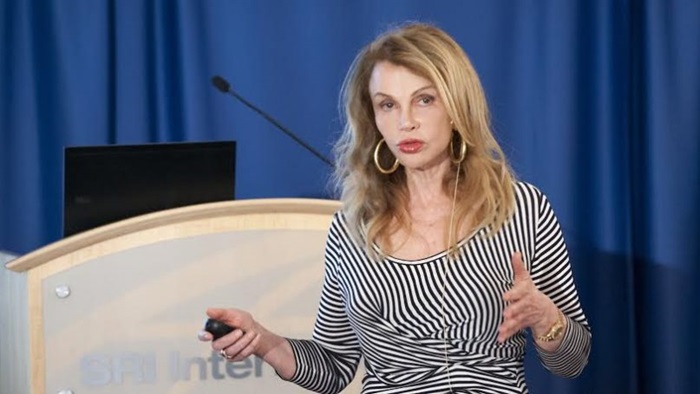
Argentine-American economist and mathematician Graciela Chichilnisky has spent decades working on climate economics and carbon markets.
She co-founded Global Thermostat, one of the early companies developing direct air capture technology capable of removing carbon dioxide directly from the atmosphere.
The company entered a new phase in May 2024 when Zero Carbon Systems acquired Global Thermostat, combining its carbon-capture technology with Zero Carbon Systems’ engineering platform. The Global Thermostat website now redirects to Zero Carbon Systems.
The technology is being developed toward larger-scale carbon removal, an area attracting growing attention as governments and companies search for ways to complement emissions reductions with direct removal of existing atmospheric CO2.
Chichilnisky’s contribution differs from those of younger founders entering AI or digital health, but it reinforces the range of sectors in which Latina innovators have built influential technology companies.
A Larger Community, but Persistent Gaps
These five careers do not follow a single pattern. Some founders remain with the companies they created. Others have moved into new ventures, left their startups or seen their technology absorbed into larger organizations.
That is also a more accurate picture of entrepreneurship than the traditional narrative built around uninterrupted growth.
Representation remains a serious challenge. Women still hold only about a quarter of tech-talent positions across U.S. industries, while Latinas face additional barriers related to advancement, workplace flexibility and bias.
But the ecosystem around them is considerably larger than it was a decade ago. Organizations such as Latinas in Tech now connect professionals across more than 25 chapters, while AI, healthtech, climate technology and enterprise software are opening new fields in which Latina engineers, executives and founders can build companies.
The next measure of progress will go beyond counting how many Latinas enter technology. It will be visible in how many have access to capital, reach senior technical and executive roles, build companies that survive beyond their first funding rounds and influence how the technologies shaping the next decade are designed.