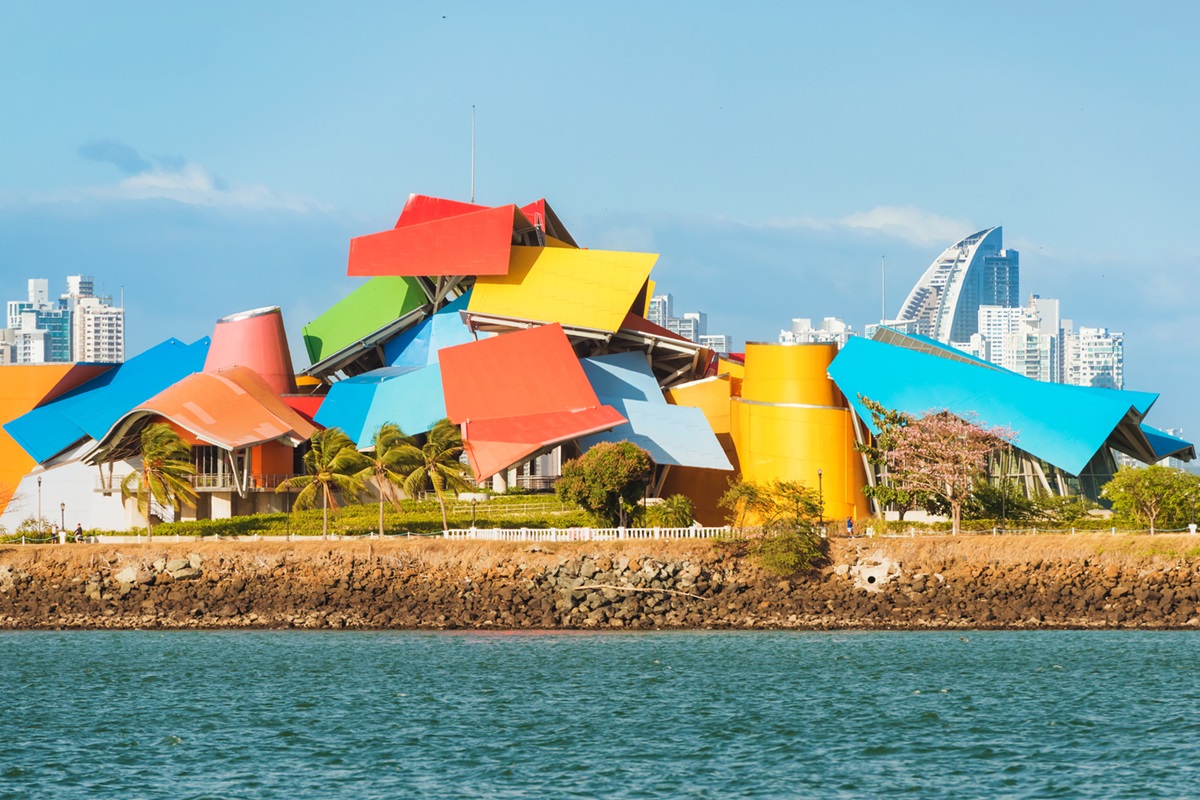
Choosing the 10 greatest Latin American athletes of all time is an exercise almost guaranteed to generate disagreement. Soccer alone offers enough legends to fill the list. Baseball has produced generations of Caribbean stars, while boxing, Formula 1, basketball and Olympic sports have given the region some of the most accomplished competitors in history.
The picture has also changed in recent years. Lionel Messi finally won the FIFA World Cup in 2022 and remained at the highest international level through the 2026 tournament. Cuban wrestler Mijaín López achieved something unprecedented at Paris 2024, while Marta and Yulimar Rojas strengthened the case for a list that better reflects the extraordinary contribution of Latin American women to world sport.
Here is PanamericanWorld’s updated selection.
Pelé: “King of Soccer”
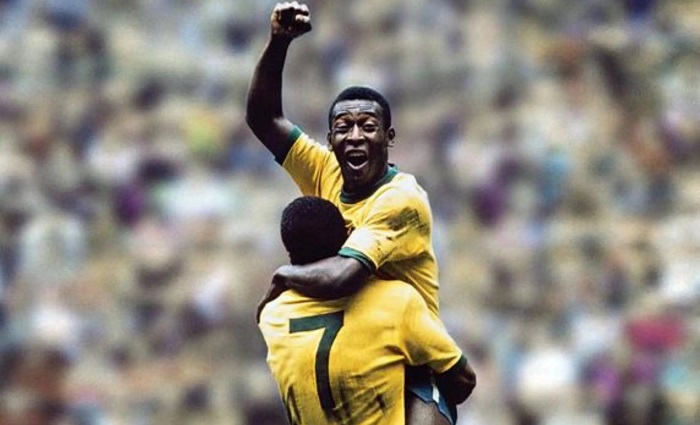
Edson Arantes do Nascimento remains one of the central figures in the history of world soccer.
Pelé won three FIFA World Cups with Brazil, in 1958, 1962 and 1970, a feat no other male player has matched. He was only 17 when he scored twice against Sweden in the 1958 final and became the global face of a Brazilian team that transformed the sport aesthetically and competitively.
Arguments over his exact career goal total continue because of the different treatment of friendlies and exhibition matches during his era. The larger point is beyond dispute. Pelé scored hundreds of official goals, dominated Brazilian and international soccer and became one of the first athletes from Latin America to develop truly global celebrity.
His influence reached well beyond his statistics.
Diego Armando Maradona: A Polemic “Pelusa”

Diego Armando Maradona’s career cannot be separated from Mexico 1986.
His performance in that World Cup remains one of the most influential individual displays in soccer history. Against England in the quarterfinals he scored both the controversial “Hand of God” goal and, minutes later, one of the greatest goals ever seen at a World Cup, carrying the ball from his own half through the English defense.
Argentina went on to win the tournament, with Maradona as its undisputed leader. Four years later, he took a less dominant Argentine team back to the final.
His club career was equally important. At Napoli, Maradona helped a team from southern Italy challenge the traditional power structure of Serie A and win league titles in 1987 and 1990.
His life outside the field was turbulent and frequently controversial. On it, his combination of technique, imagination and personality made him a cultural figure whose importance stretched far beyond Argentina.
Lionel Messi: A “Pulga” with Many Records
For years, the main argument used against Lionel Messi in comparisons with Argentina’s greatest sporting icons was the absence of a FIFA World Cup title. Qatar 2022 ended that discussion.
Messi captained Argentina to its third World Cup, scoring seven goals during the tournament and twice in the final against France. The achievement came one year after he had finally lifted the Copa América, ending a long sequence of painful defeats with the national team.
His résumé already included a record eight Ballon d’Or awards, four UEFA Champions League titles with Barcelona and a collection of scoring and assist records that few players have approached.
His longevity has added another dimension. At 39, Messi led Argentina to the 2026 World Cup final and returned to the Ballon d’Or shortlist, more than two decades after the beginning of his professional career. His place among Latin America’s greatest athletes is no longer built only on talent or statistics. It rests on sustained excellence across different generations of soccer.
Roberto Clemente: A Great Man and Baseball Player
Roberto Clemente became one of Major League Baseball’s first great Latin American superstars while confronting racial and linguistic barriers that affected Caribbean and Latino players during the 1950s and 1960s.
The Puerto Rican finished his career with exactly 3,000 hits and a .317 batting average. He won four National League batting titles, 12 Gold Gloves and two World Series championships with the Pittsburgh Pirates. In 1971 he was named World Series MVP.
His legacy became even larger after his death.
On December 31, 1972, Clemente boarded a plane carrying aid to victims of an earthquake in Nicaragua. The aircraft crashed shortly after leaving Puerto Rico.
MLB later renamed its annual humanitarian honor the Roberto Clemente Award. His story remains inseparable from both baseball excellence and the idea that an athlete’s public influence can extend beyond competition.
Photo of Roberto Clemente from DepositPhotos
Juan Manuel Fangio: Speed Master
Decades before Formula 1 became the technologically sophisticated global championship it is today, Juan Manuel Fangio established standards that seemed almost impossible to match.
The Argentine won five world championships, in 1951, 1954, 1955, 1956 and 1957. Even more remarkable, he did it with four different constructors.
His five-title record survived for 46 years before Michael Schumacher surpassed it in 2003.
Fangio competed in an era when motor racing was extraordinarily dangerous and careers were often short. His precision, adaptability and understanding of machinery allowed him to dominate without relying on a single car or team.
His winning percentage in Formula 1 remains among the most extraordinary in the championship’s history.
Manu Ginobili: A Trailblazing Career Redefining Basketball Excellence

Ginóbili retired in 2018 after spending all 16 of his NBA seasons with San Antonio. He won four NBA championships, became a two-time All-Star and was named the league’s Sixth Man of the Year in 2008.
His international career was even more important for Latin American basketball.
Ginóbili led Argentina to Olympic gold at Athens 2004, including a 29-point performance in the semifinal victory over the United States. Argentina also won bronze in Beijing four years later and finished second at the 2002 FIBA World Championship.
In 2022, Ginóbili was inducted into the Naismith Memorial Basketball Hall of Fame. His career helped prove that a player developed outside the United States could become central to an NBA dynasty while simultaneously transforming his national team.
Mijaín López: Five Olympic Games, Five Gold Medals
Any updated ranking of Latin American sporting legends has to include Mijaín López.
At Paris 2024, the Cuban Greco-Roman wrestler defeated Chile’s Yasmani Acosta 6-0 in the 130-kilogram final and became the first athlete in Olympic history to win the same individual event at five consecutive Games.
López was champion in Beijing 2008, London 2012, Rio 2016, Tokyo 2020 and Paris 2024. The sequence covered 16 years and several generations of opponents.
His Paris victory was particularly remarkable because he entered the Games at 41 after barely competing since Tokyo. Once the final ended, López removed his wrestling shoes and left them on the mat, the traditional gesture signaling retirement.
Few Latin American athletes have ever produced a record with such a clear place in global Olympic history.
Marta: The Woman Who Redefined Brazilian Soccer
Brazil’s soccer mythology has traditionally been dominated by men. Marta Vieira da Silva forced that history to make room for her.
Marta won the FIFA World Player of the Year award six times and became one of the defining players in the development of women’s soccer during the 21st century. Her ability to score, create and carry Brazil through major tournaments made her a reference point for an entire generation.
She never won the World Cup or Olympic gold, but she collected three Olympic silver medals, in 2004, 2008 and 2024. At Paris 2024, Brazil reached the final before losing 1-0 to the United States.
Her club career also remained successful late into her playing years. In 2024 she helped Orlando Pride win its first NWSL championship.
Marta’s importance is difficult to measure only through trophies. For millions of young female players in Brazil and across Latin America, she expanded the possibilities of what a professional soccer career could look like.
Julio César Chávez: Mexico’s Boxing Standard
Few athletes have embodied Mexican boxing culture as completely as Julio César Chávez.
Between 1980 and 2005, Chávez built one of the most remarkable professional records in the sport. He became world champion in three weight divisions and went unbeaten through his first 90 professional fights before drawing with Pernell Whitaker in 1993.
His fights against Edwin Rosario, Meldrick Taylor, Héctor Camacho and Oscar De La Hoya marked different stages of an extraordinarily long career.
Chávez retired with a record of 107 victories, six defeats and two draws and was inducted into the International Boxing Hall of Fame in 2011.
His influence can still be seen in Mexican boxing, where nearly every new champion is eventually measured against the standard he established.
Yulimar Rojas: The Triple Jump Record Breaker
Venezuelan Yulimar Rojas has built one of the strongest résumés ever produced by a Latin American track-and-field athlete.
She won Olympic gold in the triple jump at Tokyo 2020 with a world-record leap of 15.67 meters. A year later, at the World Indoor Championships in Belgrade, she improved the world record to 15.74 meters.
Rojas is also a four-time outdoor world champion and has dominated her event for much of the past decade.
An Achilles injury prevented her from defending her Olympic title at Paris 2024, interrupting a period in which she had become the clear reference point in women’s triple jump.
Her 15.74-meter mark still places her in a unique position in Latin American athletics. Few athletes from the region have changed the historical limits of their event so decisively.
Other Latin American Sporting Legends
Reducing Latin American sporting history to 10 names inevitably leaves extraordinary careers outside the main list.
Baseball alone offers Pedro Martínez, one of the greatest pitchers of the modern era; Mariano Rivera, MLB’s all-time saves leader and the first player unanimously elected to the Baseball Hall of Fame; Albert Pujols, Miguel Cabrera, Juan Marichal and Martín Dihigo.
Cuban boxing produced Teófilo Stevenson and Félix Savón, both three-time Olympic champions. Panama gave boxing Roberto Durán, while Brazil produced Formula 1 icon Ayrton Senna.
Soccer provides an even longer debate, with Ronaldo Nazário, Alfredo Di Stéfano, Ronaldinho, Romário and Hugo Sánchez among the candidates.
Athletics adds Javier Sotomayor and Alberto Juantorena. Tennis has Guillermo Vilas, Gustavo Kuerten, Gabriela Sabatini and Marcelo Ríos. Cuban fencer Ramón Fonst dominated the earliest years of Olympic sport in the region.
Any top 10 will remain subjective. What has become clearer since the original version of this ranking is that Latin America’s sporting history cannot be understood only through soccer, baseball and boxing. From López’s unprecedented Olympic sequence to Rojas’ world record and Marta’s influence on women’s soccer, the region’s greatest athletes have left their mark across almost every major stage in international sport.