Puerto Rico occupies a remarkable place on the world sporting map. Its population is relatively small, but its influence has been enormous, particularly in baseball and boxing, two sports in which Puerto Rican athletes have repeatedly reached the highest level. Tennis, track and field and basketball have also produced moments that became part of the island’s collective memory.
That legacy has continued to grow. Since making its Olympic debut at London 1948, Puerto Rico has built a medal history that now includes 12 Olympic medals: two gold, two silver and eight bronze. Paris 2024 added two more, with Jasmine Camacho-Quinn taking bronze in the women’s 100-meter hurdles and Sebastián Rivera doing the same in freestyle wrestling.
Baseball has produced another extraordinary milestone. Carlos Beltrán’s induction into the National Baseball Hall of Fame in July 2026 made him the sixth Hall of Famer closely identified with Puerto Rico, strengthening an already remarkable tradition that includes Roberto Clemente, Orlando Cepeda and Iván Rodríguez.
Selecting only ten names is therefore more difficult than ever. This ranking is not based exclusively on statistics. International impact, historical significance, longevity, championships and the athlete’s place within Puerto Rican sporting culture also matter.
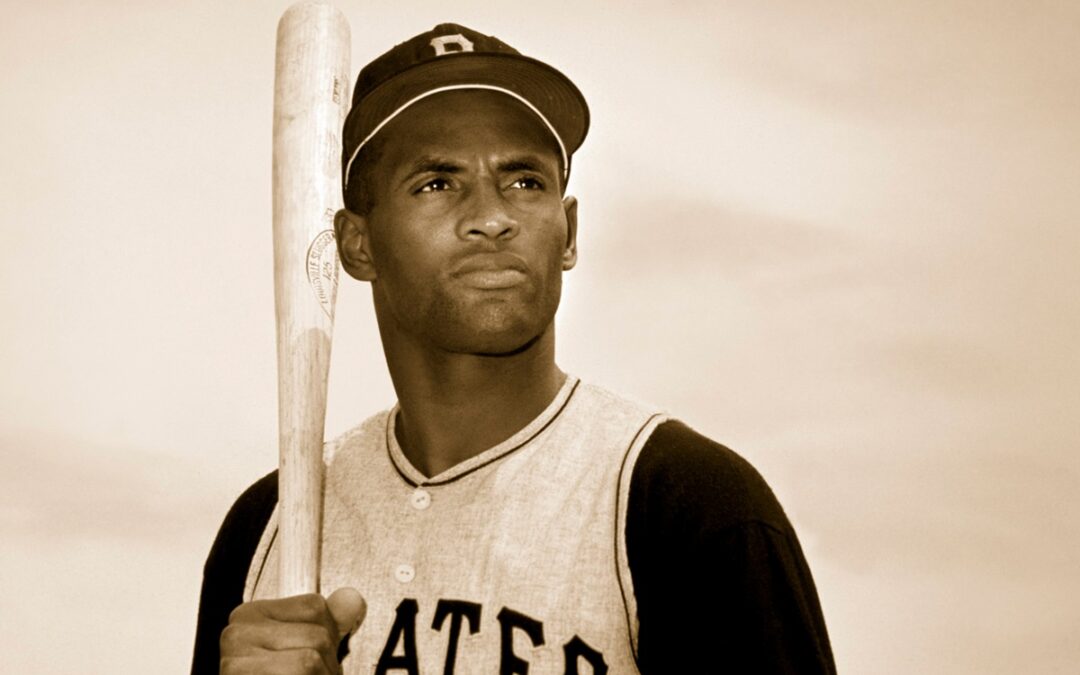
Roberto Clemente
No discussion about Puerto Rican sports can begin anywhere else.
Roberto Clemente was much more than one of baseball’s greatest right fielders. He became a symbol of Puerto Rican and Latino excellence in the United States at a time when Latin American players confronted enormous cultural and racial barriers.
Clemente spent all 18 of his Major League seasons with the Pittsburgh Pirates. He finished with exactly 3,000 hits, a .317 batting average, four National League batting titles, 12 Gold Gloves and 15 All-Star selections. He was the National League MVP in 1966 and helped Pittsburgh win the World Series in 1960 and 1971. In the latter championship, he hit .414 and was named World Series MVP.
Yet Clemente’s place in history extends far beyond baseball.
On December 31, 1972, he boarded a plane carrying humanitarian supplies for victims of an earthquake in Nicaragua. The aircraft crashed shortly after leaving Puerto Rico, killing everyone aboard.
Months later, the Baseball Hall of Fame waived its normal waiting period and elected him to Cooperstown. MLB’s annual Roberto Clemente Award, given to a player who combines excellence on the field with extraordinary community involvement, keeps alive the dimension of his legacy that statistics cannot measure.
For Puerto Rico, Clemente remains more than a sporting hero. He is a national icon.
Wilfredo Gomez

Puerto Rico has produced an astonishing number of world boxing champions, but few punched with the devastating efficiency of Wilfredo “Bazooka” Gómez.
Gómez announced himself internationally by winning the 1974 amateur world championship in Havana. As a professional, he developed into one of the most feared punchers of his generation.
He became world champion in three weight divisions and made 17 successful defenses of the junior featherweight championship, a division record. Even more extraordinary was the way he won. Gómez put together a streak of 32 consecutive victories by knockout. Of his 44 professional victories, 42 came inside the distance.
His fights against Carlos Zárate, Lupe Pintor and Salvador Sánchez became part of Latin American boxing history. The 1981 defeat to Sánchez remains one of the sport’s classic Puerto Rico-Mexico confrontations.
Gómez eventually retired with a record of 44 wins, three defeats and one draw and was inducted into the International Boxing Hall of Fame.
In a country obsessed with boxing, “Bazooka” still occupies a special category.
Related article: Roberto Clemente, the legend of the greatest Latino baseball player of all time
Orlando “Peruchín” Cepeda

Orlando “Peruchín” Cepeda was one of the first great Puerto Rican power hitters to establish himself in Major League Baseball.
He exploded onto the scene with the San Francisco Giants in 1958, winning National League Rookie of the Year honors unanimously.
His finest season came in 1967 after moving to the St. Louis Cardinals. Cepeda hit .325 with 25 home runs and 111 RBIs and became the first unanimous National League MVP in more than three decades. St. Louis also won the World Series that season.
Cepeda retired with a .297 batting average, 379 home runs and 1,365 RBIs. He was elected to the Baseball Hall of Fame in 1999, becoming the second native Puerto Rican after Clemente to reach Cooperstown.
Cepeda died in June 2024 at the age of 86, but his influence survives in every discussion about Puerto Rico’s extraordinary contribution to Major League Baseball.
Ivan Rodriguez

Puerto Rico has produced elite catchers for generations, but Iván “Pudge” Rodríguez set a standard few players anywhere have matched.
Rodríguez played 21 seasons in Major League Baseball and retired after appearing in 2,427 games behind the plate, the most ever by a catcher. He collected 2,844 hits, 311 home runs and 1,332 RBIs while batting .296.
Defensively, he was extraordinary. His arm changed the way opposing teams approached the running game. Rodríguez won 13 Gold Gloves, the most ever by a catcher, and appeared in 14 All-Star Games.
One important correction to earlier versions of this ranking is that Rodríguez won the American League MVP award in 1999, not 2009. He later played a central role in the Florida Marlins’ run to the 2003 World Series championship and was named MVP of that year’s National League Championship Series.
In 2017, Rodríguez was elected to Cooperstown on his first ballot.
Yadier Molina

Yadier Molina retired after the 2022 season, so his place in baseball history can now be assessed as a complete body of work.
He spent all 19 of his Major League seasons with the St. Louis Cardinals, an increasingly rare achievement in modern professional sports.
Molina was a 10-time All-Star, won nine Gold Gloves and four Platinum Gloves, and captured two World Series championships. He caught 2,184 games for St. Louis, the most games caught by one player for a single franchise in Major League history.
His statistical value tells only part of the story. Molina built his reputation through game calling, preparation, control of the running game and an exceptional ability to manage pitching staffs.
His connection with Puerto Rico has remained equally strong. Molina represented the island in every edition of the World Baseball Classic during his playing career, helping Puerto Rico reach consecutive championship games in 2013 and 2017. He later moved into management and is managing Puerto Rico in the 2026 World Baseball Classic cycle.
Molina will become eligible for the Baseball Hall of Fame ballot in 2028, alongside longtime Cardinals teammate Albert Pujols.
Whether he enters Cooperstown on his first attempt will provoke debate. His status as one of the most important Puerto Rican baseball players of his generation does not.
Felix “Tito” Trinidad

If Gómez represented destructive punching power, Félix Trinidad became the great Puerto Rican boxing idol of the 1990s and early 2000s.
“Tito” combined charisma, aggression and punching power in a way that turned his major fights into national events. He became world champion in three weight divisions and captured titles sanctioned by the IBF, WBA and WBC.
His biggest night came in September 1999, when he defeated Oscar De La Hoya in Las Vegas in one of the most anticipated fights of the decade. Other important victories included Fernando Vargas, Pernell Whitaker and Héctor “Macho” Camacho.
Trinidad finished his professional career with 42 victories, including 35 knockouts, and only three defeats.
His influence cannot be understood through numbers alone. At his peak, Puerto Rico virtually stopped whenever Tito entered the ring. That emotional connection with the island places him among its most significant athletes.
Monica Puig

Before Camacho-Quinn conquered Tokyo, Mónica Puig produced perhaps the most emotional Olympic moment in Puerto Rican sporting history.
She arrived at Rio 2016 ranked outside the group of leading favorites in women’s tennis. Then she began eliminating them.
Puig defeated Garbiñe Muguruza and Petra Kvitová on her way to the final, where she faced Germany’s Angelique Kerber, the reigning Australian Open champion and one of the best players in the world.
Puig won in three sets.
With that victory, she became the first athlete competing for Puerto Rico to win an Olympic gold medal.
Her professional career was later disrupted by injuries, and she announced her retirement in 2022. She finished with two WTA singles titles and never accumulated the career numbers of tennis’ biggest stars.
But historical greatness is not always measured by longevity.
On August 13, 2016, Puig achieved something no Puerto Rican athlete had accomplished before her. That alone guarantees her permanent status in the island’s sporting history.
Jose Juan Barea

Basketball is one of the sports that sparks the most interest in Puerto Rico. Among so many good players throughout its history we selected J.J. Barea, NBA champion with the Dallas Mavericks in 2011.
Barea played for 14 years at the NBA, with two franchises: Mavs and Timberwolves. This point guard averaged 8.9 points and 3.9 assists per game. In addition, he also shone with the Puerto Rican national team, winning the title at the 2011 Pan American Games and silver in the 2007 edition. To his record we add the gold medal won at the Central American and Caribbean Games of 2006 and 2010.
Robert Alomar

Alomar can perhaps be considered the most complete second baseman in major league history. He excelled in defense, so much so that he was awarded 10 Golden Gloves, but was also unstoppable with the bat, winning four Silver Bats.
His best moments were experienced with the Toronto Blue Jays, where he obtained two World Series championship rings. In 2011, Alomar was inducted into the Hall of Fame in Cooperstown. This year, an allegation of sexual harassment against the Puerto Rican cast a shadow over his figure. MLB decided to cancel his contract as a consultant, although the Hall of Fame clarified that it would keep its plaque “in recognition of his achievements in the game.”
Jasmine Camacho-Quinn

No athlete has changed Puerto Rico’s Olympic record book more dramatically in recent years than Jasmine Camacho-Quinn.
Her Olympic story began painfully. At Rio 2016, she crashed into a hurdle during the semifinals and failed to reach the final.
Tokyo transformed that disappointment into redemption.
Camacho-Quinn ran 12.26 seconds in the semifinal, setting an Olympic record that still stands, before winning the final in 12.37 seconds. Her victory gave Puerto Rico its second Olympic gold medal and its first in athletics.
She did not disappear after Tokyo. Camacho-Quinn won bronze at the 2022 World Championships and silver at Budapest 2023. Then, at Paris 2024, she returned to the Olympic podium with a bronze medal after finishing in 12.36 seconds.
That second Olympic medal changed her historical status. Camacho-Quinn became the first athlete representing Puerto Rico to win medals at two different Olympic Games.
What once might have been considered a controversial inclusion in a Puerto Rican top 10 is no longer controversial at all.